


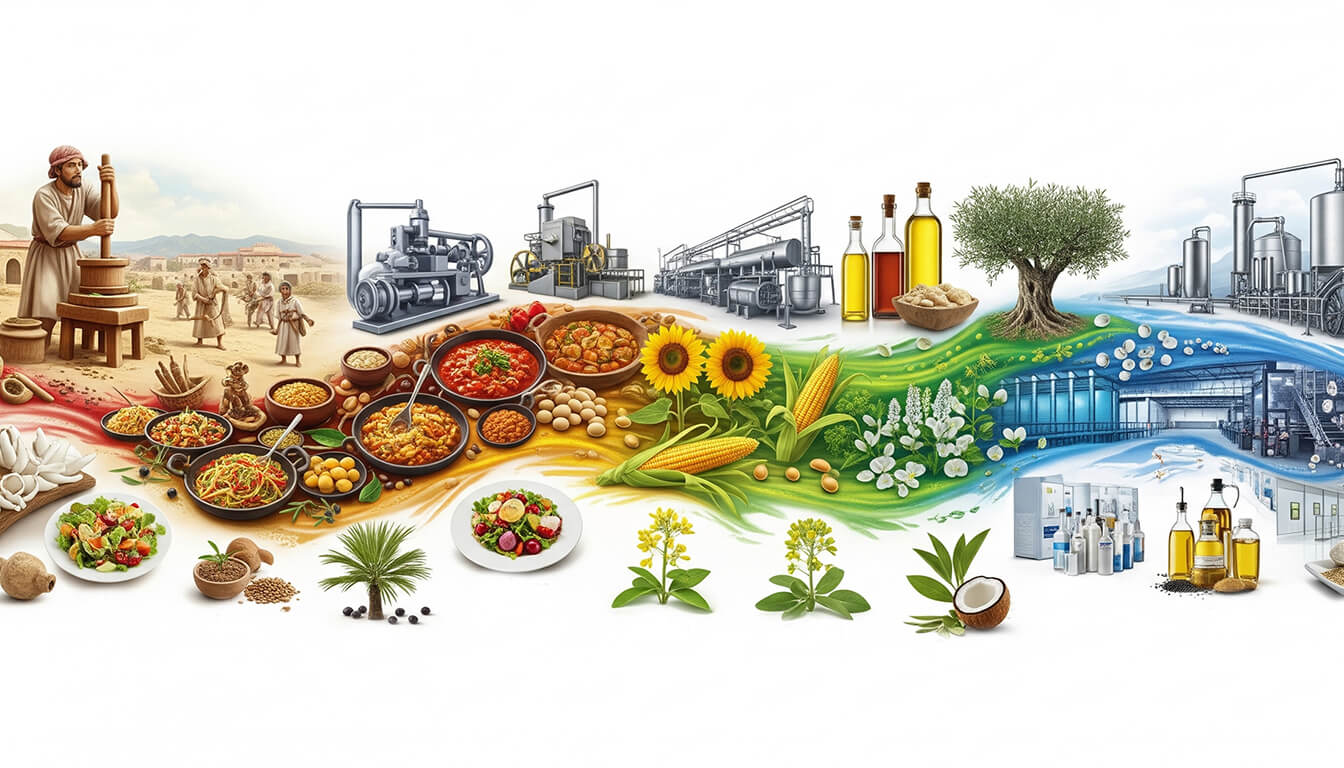
Vegetable oils have held an indispensable role in human history for nutrition, health, and industrial applications. The development of their use and industry has paralleled the advancement of civilizations.
1. Ancient Times: Early Uses and Cultural Value (3000 BCE and Earlier)
The history of vegetable oils dates back thousands of years, beginning with the development of methods to extract oil from wild plants.
- Olive Oil: Production began in the Mediterranean basin, particularly from 4000 BCE onwards, with the domestication of the olive tree. For ancient Egyptian, Greek, and Roman civilizations, olive oil was not merely a food source; it was "liquid gold" used in cosmetics, medicine, lighting (in lamps), and religious rituals. It was extracted using rudimentary methods like pressing.
- Sesame Oil: It's known that oil was produced from sesame seeds in India as early as 2500 BCE. Sesame oil also held significant importance in Chinese and Middle Eastern cuisines.
- Linseed Oil (Flaxseed Oil): In Egypt, flaxseeds were pressed for oil as far back as 3000 BCE and used in lamp making.
- Coconut Oil: In tropical regions, especially Southeast Asia and the Pacific Islands, it has been used for nutritional and health purposes for thousands of years.
- 2. Middle Ages and Early Modern Period: Spread and New Applications
- Rapeseed and Sunflower: In medieval Europe, oil production from plants like flax, sunflower, and safflower began. Sunflower, in particular, became an important oil crop in Eastern Europe.
- New World Crops: The discovery of the Americas introduced new oil sources like corn oil and peanut oil into global cuisine and trade. These oils were transported to Africa and Asia, contributing to the formation of new culinary traditions.
- 3. Industrial Revolution and 20th Century: Mass Production and Refining
- Mechanization and Increased Efficiency: The use of steam-powered presses and more advanced hydraulic presses significantly boosted oil production capacity.
- Solvent Extraction: In the early 20th century, the development of methods using chemical solvents (typically hexane) to extract vegetable oils allowed for much higher yields from seeds. This paved the way for the commercial-scale production of oils previously considered inefficient, such as soybean and corn oil.
- Refining Processes: Chemical processes like refining, bleaching, and deodorizing became widespread to improve the oil's odor, color, and stability. This ensured longer shelf life for oils and enabled their use in various food products.
- Rise of New Oils:
- Soybean Oil: In the 20th century, soybean production boomed in America, driven by the search for alternatives to meat and dairy products and agricultural subsidies. Soybean oil became one of the most commonly used cooking oils.
- Palm Oil: Large-scale palm oil production began in Malaysia and Indonesia. Palm oil became essential to the global food industry due to its high yield and versatile applications (from food to cosmetics). However, this also brought about environmental sustainability debates.
- Margarine and Processed Foods: Vegetable oils became a primary ingredient in margarine, salad dressings, mayonnaise, and countless processed food products. Processes like hydrogenation, which solidify liquid oils (e.g., for margarine production), gained popularity.
- 4. 21st Century: Health, Sustainability, and Innovation
- Health-Oriented Consumption: With growing consumer health awareness, there's increased demand for oils low in saturated fat and high in unsaturated fat, such as olive oil, canola oil, and avocado oil. Oils containing Omega-3 fatty acids have also gained popularity. Interest in minimally processed and organic oils has risen.
- Sustainability Concerns: Environmental concerns related to the production of certain oils like palm oil, such as deforestation and biodiversity loss, have increased demand for sustainable production practices and certifications (e.g., RSPO).
- Biofuel and Industrial Uses: Vegetable oils are no longer just food; they've become an important raw material for biodiesel production. Their use in the cosmetics, pharmaceutical, and chemical industries is also growing.
- Technological Advancements: Research is ongoing into new refining techniques, extended shelf life solutions, and product innovations to enhance the quality and efficiency of vegetable oils. Precision agriculture and genetic breeding play a role in increasing the yield of oilseed crops.
- Global Market Dynamics: The global vegetable oil market continues to expand. The Asia-Pacific region is both the largest producer and consumer, driven by increasing population and economic development.