


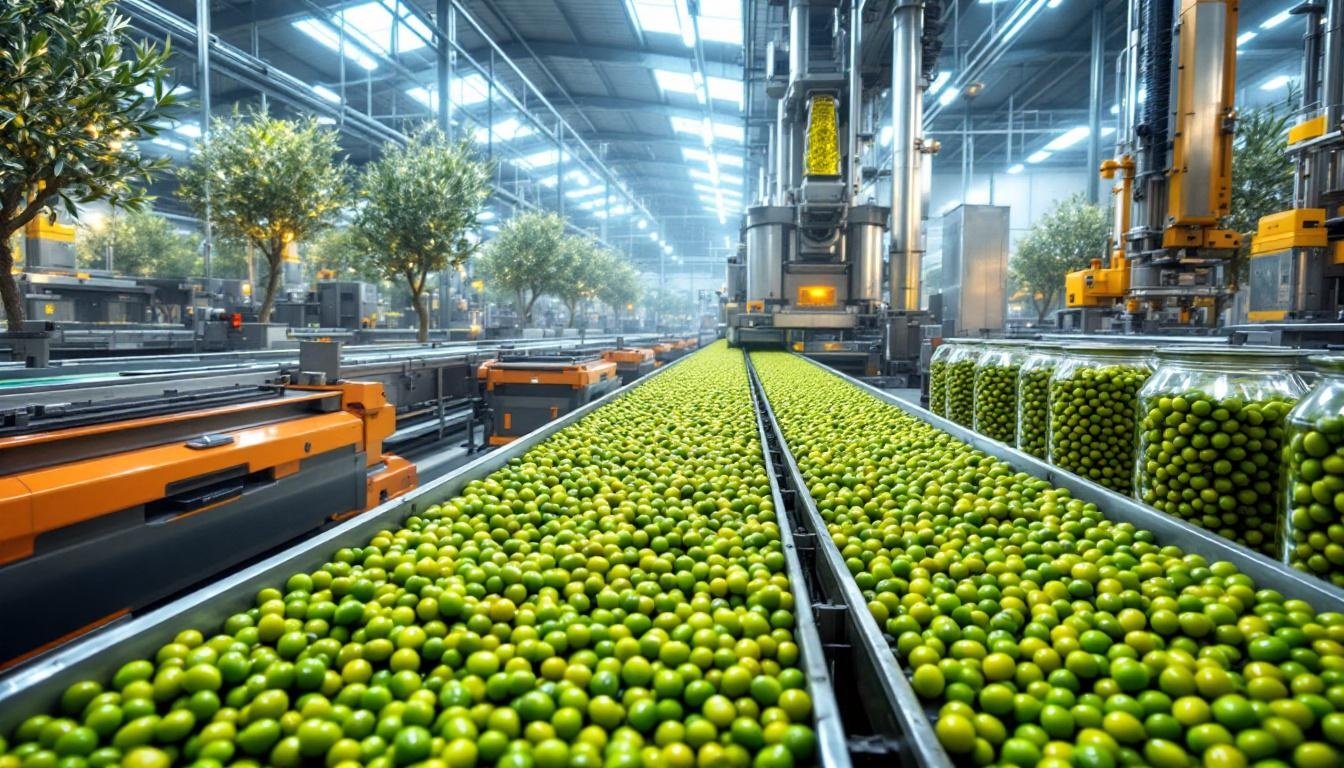
Olives and Industrial Production
The olive, a symbol and staple food of the Mediterranean basin for thousands of years, has undergone a development process from traditional, small-scale production to today's modern and large-scale industrial facilities for both table olives and olive oil.
Industrial Production Processes (For Table Olives)
Table olives undergo various processes to remove their bitterness and make them edible. In industrial production, these processes are standardized:
Harvesting and Transportation:
- Harvesting: Olives are harvested according to their ripeness, either by hand, by shaking branches with poles, or with modern mechanical shakers. Industrial production favors fast and efficient harvesting methods.
- Transportation: Olives are quickly transported to processing facilities, typically in shallow, perforated crates to prevent bruising and damage. Processing within 24 hours of harvest is important for quality.
- Sorting, Washing, and Calibration:
- Sorting: At facilities, olives are sorted to remove leaves, twigs, foreign matter, and damaged or bruised fruits.
- Washing: They are washed to remove dirt, dust, and microbial load.
- Calibration (Sizing): Olives are sorted by size using automatic machines, which is critical for uniform processing and packaging.
- Debittering and Fermentation (Curing): Different methods are applied to remove oleuropein, the compound responsible for the natural bitterness of olives:
- Alkaline Treatment (Caustic Method / Spanish Style Green Olives): Olives are submerged in a sodium hydroxide (caustic) solution. This method removes bitterness much faster (within hours). This is followed by extensive washing and a fermentation phase. This method is widely used, especially to meet rapid production and market demands. A large portion of Türkiye's olive exports are processed this way.
- Natural Brining (Traditional Method / Dry-Salted Olives, Water-Cured Olives): Olives are simply cured in a saltwater brine. Oleuropein gradually breaks down through the action of microorganisms (lactic acid bacteria) naturally present on the olives, and fermentation occurs. This process can take 6 to 12 months. Olives produced this way can have a richer flavor and probiotic properties. Dry-salted olives (like sele zeytini) involve layering olives with salt, allowing them to release their own water and bitterness.
- Cracked/Slit Methods: Used for green olives. Slitting or cracking the olives allows the bitterness to leach into the water more quickly. This is followed by brining and a short fermentation period for curing.
- Washing and Aeration: After debittering, olives are thoroughly washed and aerated multiple times to remove caustic residues or to control the fermentation process.
- Sorting and Grading: Processed olives are inspected again and separated according to quality standards (color, texture, defects, etc.).
- Packaging:
- Olives are filled into various consumer packaging (glass jars, tin cans, vacuum-sealed pouches, plastic containers).
- Fresh brine, sometimes citric acid, and olive oil are added to extend shelf life. Additional heat treatments like pasteurization may also be applied.
- Standardization: Ensures consistent product quality, flavor, and texture in every batch.
- High Capacity: Allows for the processing of larger volumes of olives.
- Food Safety: Controlled environments and hygiene practices minimize microbiological risks.
- Faster Market Release: Especially with the caustic method, olives can be brought to market much faster than with traditional methods.
- Accessibility: Enables products to reach more consumers through extensive distribution networks.
- Environmental Impact: Olive mill wastewater (from olive oil production) and other effluents from olive processing facilities can cause significant environmental pollution due to their high organic load and phytotoxic compounds. The management and treatment of these wastes are major challenges.
- Water Consumption: Both olive cultivation and processing require significant amounts of water. This leads to sustainability issues in water-scarce regions.
- Energy Consumption: Energy-intensive processes are used in production, processing, and storage stages.
- Nutrient Loss/Sensory Differences: Aggressive alkaline treatments or excessive pasteurization can reduce some of the olive's natural antioxidants (like oleuropein) and its distinctive flavor profile. Naturally fermented olives often have more complex aromas, while industrially processed ones may offer a more uniform taste.
- Waste Management: The efficient utilization of by-products such as olive pomace and pits (for fertilizer, fuel, etc.) is crucial.
- Wastewater Treatment and Recycling: New technologies are being developed for treating and recycling olive mill wastewater.
- Energy Efficiency and Renewable Energy: Measures for energy efficiency in facilities and the use of renewable energy sources (like solar power) are being promoted.
- Organic Farming and Biodiversity: Organic olive cultivation reduces the use of chemical fertilizers and pesticides, supporting soil health and biodiversity.
- Water Conservation: Modern irrigation methods like drip irrigation help optimize water use in olive groves.