


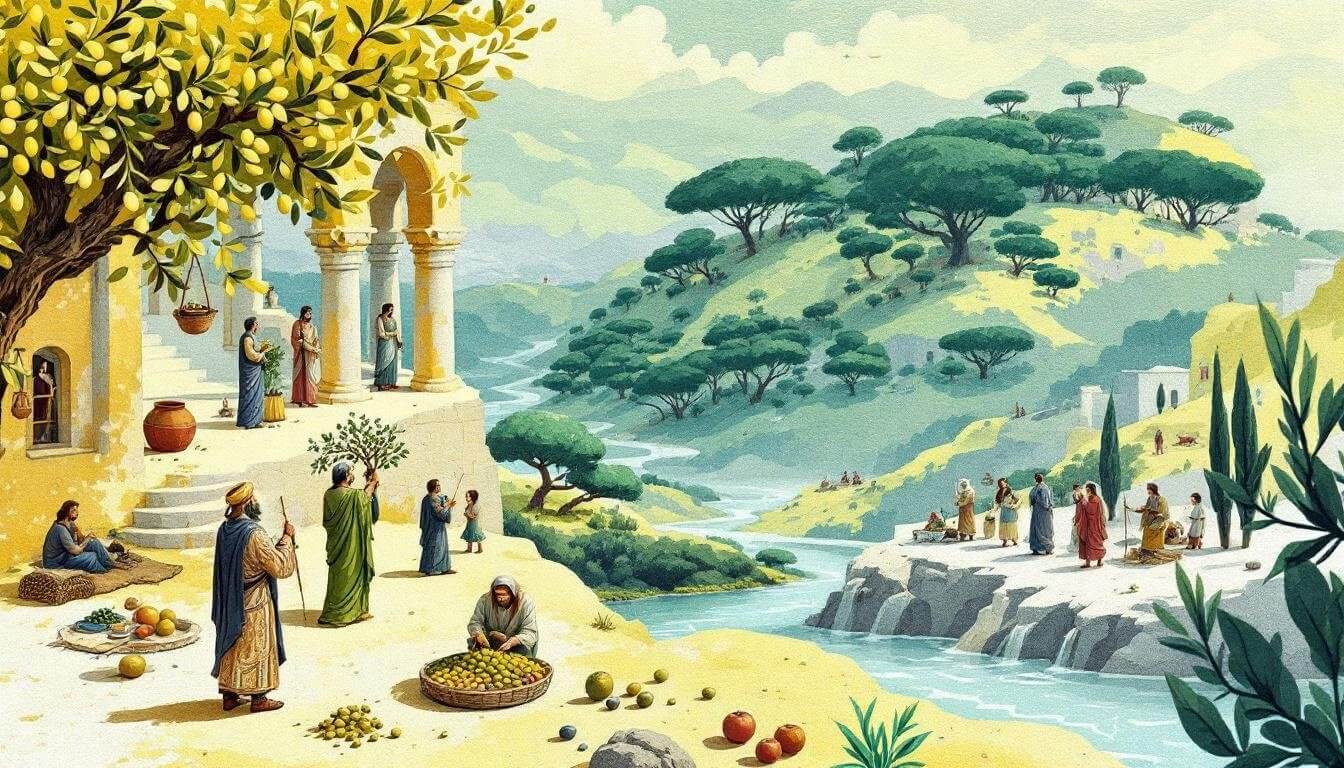
The olive tree (Olea europaea), for thousands of years, has been one of the most significant symbols of the Mediterranean basin and human culture in general. Beyond being merely a food source, it has left deep imprints across a wide spectrum, from mythologies to religions, from art to commerce, and from war to peace. The cultural importance of the olive stems from its longevity, resilience, and generous nature.
1. Origins and the Birth of Civilizations
The origins of the olive tree trace back to the Fertile Crescent, stretching from present-day Iran to northern India. It was domesticated approximately 6,000 years ago in the lands of Mesopotamia, the Levant (Eastern Mediterranean), the Aegean, and Anatolia. The olive tree and olive oil, along with wheat and barley, became one of the foundational plants of the Agricultural Revolution, playing a key role in humanity's transition to settled life and the development of early civilizations (Egypt, Greece, Rome).
- Ancient Egypt: Olive oil was used in mummification processes, as fuel for lamps in temples, and for cosmetic purposes. Pharaoh Tutankhamun is known to have worn a crown woven from olive branches as a symbol of justice.
- Ancient Greece: The olive tree was considered a symbol of Athena, the goddess of wisdom. According to legend, in a contest between Athena and the sea god Poseidon for naming the city of Athens, Athena's gift of the olive tree, symbolizing peace and prosperity, led to the city being named after her. Olympic champions were crowned with olive branches, and olive oil was a crucial trade commodity.
- Roman Empire: The Romans spread olive cultivation throughout their vast empire across the Mediterranean basin. Olive oil formed the basis of Roman cuisine and was also used as fuel for lamps, in soap making, and in health products.
- Religious and Spiritual Symbolism
- The Flood and Peace (Judaism/Christianity): In Noah's Ark narrative, the dove returning to Noah's ark with an olive branch in its beak symbolized the receding waters and the establishment of peace between God and humanity. For this reason, the olive branch has become a universal symbol of peace and hope.
- Olives in Holy Books:
- Quran: The olive is mentioned with praise in several surahs (chapters) of the Quran, including An-Nahl, At-Tin, Al-An'am, Al-Mu'minun, Abasa, and An-Nur, and is referred to as a "blessed tree." Surah At-Tin states, "By the fig and the olive."
- Bible and Torah: The olive tree is mentioned in the Bible as a symbol of peace and rebirth. The trees on the Mount of Olives, believed to have witnessed Jesus' crucifixion, and the use of olive oil in baptism ceremonies demonstrate the olive's importance in Christianity.
- Immortality and Resilience: The ability of the olive tree to live for thousands of years and withstand harsh conditions has made it a symbol of immortality, patience, and determination.
- Culinary Culture and Way of Life
- Staple Food: Olives and olive oil are indispensable staple foods in the cuisines of Mediterranean countries (Türkiye, Greece, Italy, Spain, Lebanon, etc.). They are used extensively, from salads to hot dishes, from breakfast items to mezes and pastries.
- Social and Ritualistic Use: On Mediterranean tables, olives and olive oil are often served with bread as an initial ritual, symbolizing togetherness and warmth. Olive harvest festivals are not just agricultural events but also cultural celebrations and communal rituals.
- Health and Well-being: The Mediterranean diet, with olive oil at its core due to its heart health benefits, has become a global reference for healthy living. Olives themselves, rich in fiber, vitamins, and antioxidants, are a crucial component of a healthy diet.
- Art and Literature