


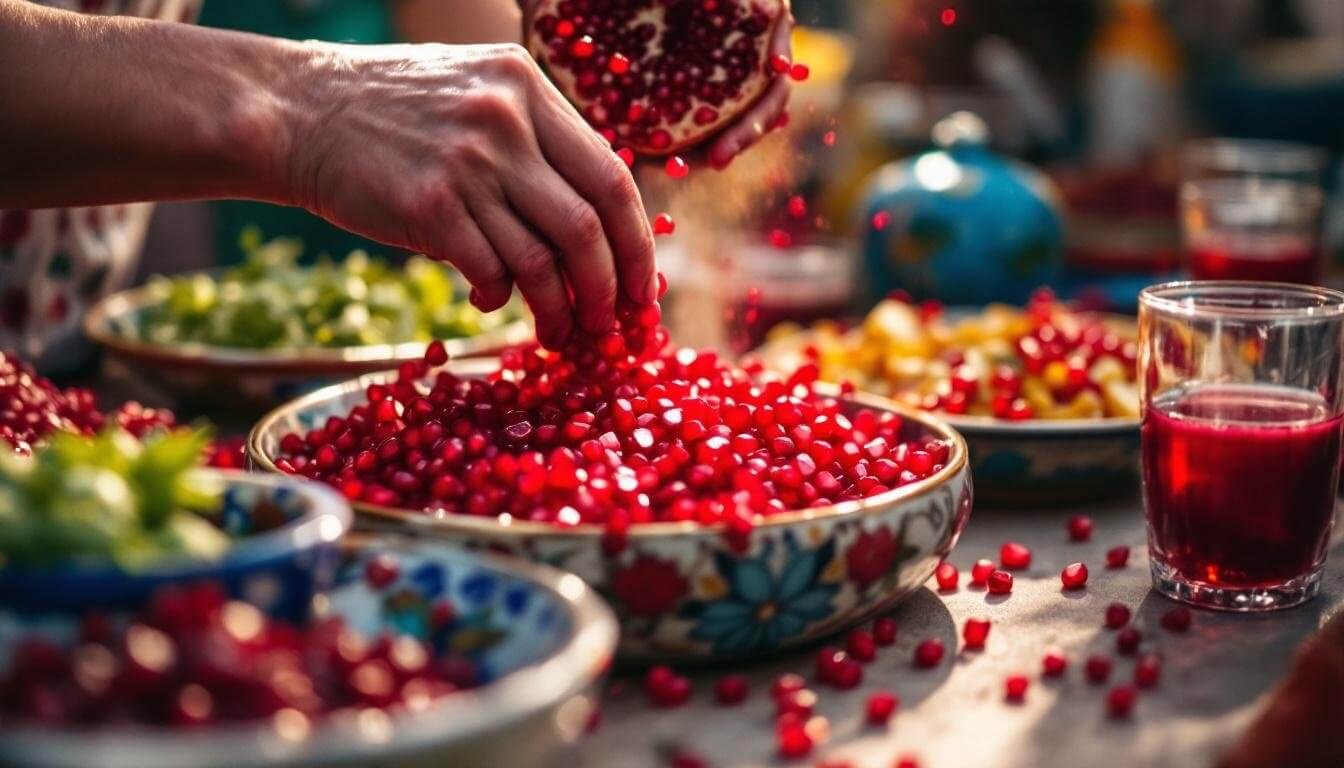
The pomegranate, with its unique taste and striking color, enjoys a wide range of uses in global cuisines. From its origins in the Middle East and Mediterranean to the Far East and the West, each culture has interpreted the pomegranate in different ways according to its own culinary traditions.
- 1. Middle Eastern and Mediterranean Cuisine (Türkiye, Lebanon, Syria, Iran, Israel, Greece)
- Pomegranate Molasses (Nar Ekşisi): This is perhaps the most iconic form of pomegranate use in this region. Made by boiling down pomegranate juice, this syrup has an intense sweet-sour flavor profile.
- Salads: An indispensable dressing for many salads like Gavurdağı salad (Türkiye), fattoush (Lebanon, Syria), and muhammara (red pepper and walnut dip - Middle East).
- Meat and Poultry Dishes: Used for fesenjan (an Iranian stew of duck or chicken with ground walnuts and pomegranate molasses), lamb stews, kebab marinades, and grilled meats.
- Mezes and Dips: Drizzled over mezes like hummus and baba ghanoush.
- Stuffed Vegetables (Dolma): Added to the stuffing mixture of olive oil-based dolma for a touch of sourness.
- Fresh Pomegranate Arils:
- Salads and Mezes: Widely sprinkled over salads and mezes to add color, texture, and a refreshing sweet-tart burst.
- Garnish: Used for visual appeal in presentations of desserts, pilafs, and main courses.
- Kısır: An essential ingredient in kısır, one of the best-known bulgur salads in Turkish cuisine.
- Pomegranate Juice: Consumed directly or used in beverages.
- Caucasian Cuisine (Azerbaijan, Georgia, Armenia)
- Narsharab (Pomegranate Molasses): In Azerbaijan, pomegranate molasses is called "narsharab" and is widely used with fish, meat, and rice dishes. It's particularly essential with grilled fish.
- Fresh Pomegranate: Consumed fresh alongside meals or used in pilafs, meat dishes (e.g., Azerbaijani pilafs), and salads.
- Georgian Cuisine: Pomegranate arils are frequently used in dishes like Nigvziani Badrijani (fried eggplant with walnut sauce) and Pkhali (vegetable purée).
- Indian Cuisine
- Fresh Pomegranate Arils (Anar):
- Chaats: Sprinkled over various Indian street foods and salads called chaats to add a sweet-sour flavor and crunch.
- Raita: Pomegranate arils are added to some varieties of raita, a yogurt-based condiment.
- Salads: Used in fruit salads and vegetable salads.
- Anardana (Dried Pomegranate Seeds): This tangy-sweet spice is used in curries, chutneys, and some breads (naan, kulcha) to impart sourness and a fruity aroma. It's particularly popular in North Indian cuisine.
- Pomegranate Juice: Used in beverages (e.g., pomegranate lassi).
- Chinese Cuisine
- Garnish: Pomegranate arils are used to garnish dishes, symbolizing fertility and unity, especially at Chinese weddings and birthday dinners.
- Juice and Desserts: Fresh pomegranate juice is consumed, and it's used in desserts like sorbets.
- Niche Savory Uses: In some regional Chinese cuisines, particularly in western regions like Xinjiang where pomegranates are grown, they are used in certain meat dishes or soups. However, it's not a dominant flavor in mainstream Chinese cuisine.
- European Cuisine (General)
- Italian Cuisine: Used in salads (e.g., arugula and Parmesan salads), some risottos, and desserts. The use of pomegranate molasses has also increased due to Mediterranean influence.
- Greek Cuisine: Used in salads, with yogurt, and in New Year's celebrations as it is believed to bring good fortune. Pomegranate liqueur and jam are also found.
- Spanish Cuisine: Used in salads and sometimes as a garnish.
- French Cuisine: Added to salads for color and a touch of tartness.
- Nordic and Central Europe: Primarily used as a modern touch in salads and desserts.
- The Americas (North and South America)
- USA and Canada:
- Salads: Widely used in spinach, arugula, or mixed green salads, especially during winter (pomegranate season), for its vibrant color and sweet-tart taste. It pairs well with walnuts, cheese (feta, goat cheese), and balsamic dressings.
- Desserts: Used as a garnish or ingredient in cakes, cookies, ice cream, and yogurt parfaits.
- Beverages: Used in cocktails (e.g., Cosmopolitan), smoothies, and juices. Grenadine syrup (made from pomegranate juice) is a key ingredient in classic cocktails.
- Savory Dishes: Some modern American chefs use pomegranate juice or molasses in marinades for pork or beef. It can also be found in salsa recipes.
- Breakfast: Added to yogurt, oatmeal, or granola bowls.
- Latin America: While not as common as in the Middle East, pomegranate has a place in some regional desserts and beverages. Its cultivation and consumption are increasing, especially in countries like Peru.