


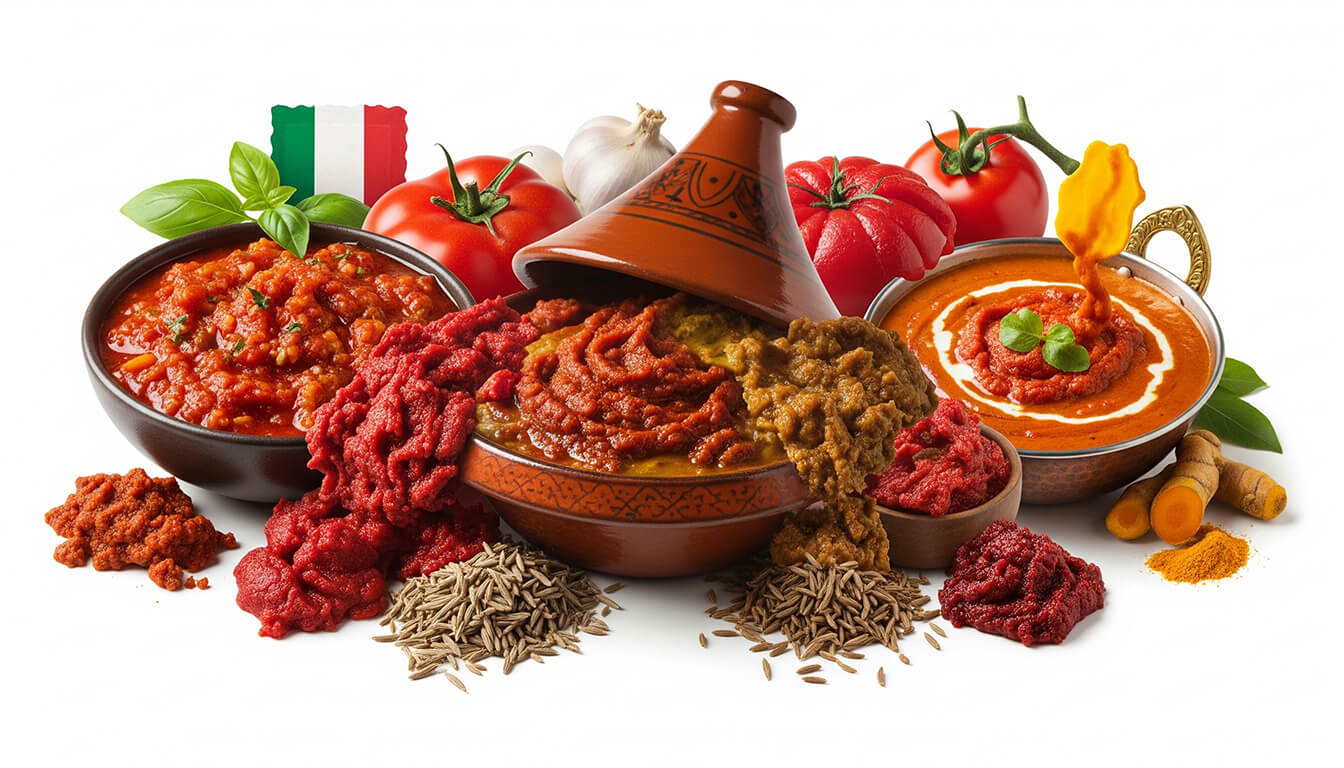
Paste is a concentrated product obtained by evaporating water from vegetables like tomatoes or peppers. A gift of sunshine and warm climates, paste has been used for thousands of years in various cultures' kitchens to add flavor, color, and umami depth to dishes. It's not just an ingredient but a reflection of culinary heritage and regional palates.
1. Tomato Paste
This is the most widely used type of paste globally.
- Türkiye: A cornerstone of Turkish cuisine. With its rich consistency and flavor, it's used in almost every pot dish (vegetable stews, meat dishes, casseroles), soups (especially lentil soup), pilafs, sauces (e.g., in çiğ köfte and kısır – bulgur salads), breakfast sauces (like menemen), and pasta dishes. It imparts a deep red color, intense tomato flavor, and umami. Both homemade sun-dried pastes and industrial pastes are common.
- Italy: Italian cuisine is one of the most intensive users of tomatoes, and tomato paste ("concentrato di pomodoro") is also important here.
- Uses: It's typically used in small quantities to intensify flavor, rather than as a main ingredient like in Turkish cuisine. Found in long-simmered meat sauces (ragù), to deepen the flavor of tomato sauces, in lasagna, and other baked dishes. Some regions also traditionally make sun-dried tomato pastes.
- Greece: Tomato paste is used in stews (stifado), meatballs (keftedes), and some traditional sauces.
- Middle East (Levant Region - Lebanon, Syria, Palestine): Tomato paste is commonly used in stews, pilafs, and stuffed vegetables (dolma). In Palestinian cuisine, tomato paste adds color and and flavor to dishes like maqluba (upside-down rice dish).
- Spain: Tomatoes are very popular in Spanish cuisine. While not as concentrated as paste, tomato purees and concentrates are used in some sauces (e.g., sofrito) and stews.
- North Africa (Morocco, Algeria, Tunisia): Tomato paste or concentrates are used in tagines, couscous dishes, and soups, adding depth and color to meals.
- West Africa: Tomato paste is used in some stews and rice dishes (e.g., Jollof rice) to provide tomato intensity.
- India: While not as common as fresh tomatoes in tomato-based sauces and curries, tomato paste is sometimes used to enhance color and thickness, especially in Westernized kitchens or restaurants.
- Pepper Paste (Red Pepper Paste)
- Türkiye: Pepper paste (biber salçası) is indispensable to Turkish cuisine, especially in the Southeast Anatolian region.
- Hot Pepper Paste (Acı Biber Salçası): Imparts a sharp heat and intense pepper aroma to dishes. Frequently used in mezes like çiğ köfte, kısır, mercimek köftesi, lahmacun, and in meat dishes.
- Sweet Pepper Paste (Tatlı Biber Salçası): Adds a sweet, deep pepper flavor and red color to dishes. Preferred in vegetable stews, casseroles, and stuffed vegetables (dolma).
- Common Uses: Pot dishes, soups, marinades, breakfast spreads (like acuka), and on pide (flatbread) and lahmacun.
- Syria/Lebanon (Muhammara): Muhammara is a popular dip whose main ingredient is pepper paste (typically combined with walnuts, pomegranate molasses, olive oil, and spices).
- Georgia/Abkhazia (Adjika): Adjika is an intensely spicy paste made with hot red peppers, garlic, herbs, and spices, used in Russian and Caucasian cuisines. It shares similarities with Turkish acuka.
- North Africa (Harissa): Harissa, originating from Tunisia, is a spicy paste made with hot chili peppers, garlic, coriander, caraway, and olive oil. It's used in couscous dishes, soups, stews, and meat marinades.
- Other Concentrated Vegetable Pastes and Their Uses
- Ginger/Garlic Paste: A staple in Indian and some Asian cuisines, forming the base for curries, marinades, and sauces.
- Korean Chili Paste (Gochujang): A fermented hot pepper paste, fundamental to Korean cuisine. Used in bibimbap, jjigae (stews), and marinades.
- Miso (Japan): A fermented soybean paste, a fundamental seasoning in Japanese cuisine used in soups (miso soup), sauces, and marinades.